TRIZ training

Solve complex problems, innovate with confidence — and put it into practice, during the course, on one of your real cases.

3 days · 18 hours · a real case as the running thread

Three days to acquire a structured approach to technical problem solving and innovation — and apply it, from the very session, to one of your real industrial cases.

Beyond the tools, the course instils a mindset of inventive engineering: discover TRIZ theory, its methods and tools, and learn to chain them into a complete process — from problem diagnosis through to the action plan. Refuse compromise, aim for the Ideal Final Result, reason by analogy across the technical heritage of every sector.

Duration3 days · 18 hours, continuous or spread out
FormatIn-house or inter-company · on-site or remote
Group size4 to 10 participants per session
MaterialA real case from your organisation, the running thread of the 3 days

What you will be able to do

By the end of the course, each participant is able to:

What sets this course apart

A method, not a catalogue of tools

A method, not a toolbox

Every tool is taught in its rightful place within a rigorous four-step process — not as a loose collection.

“No-compromise” logic

We aim for the Ideal Final Result rather than trading off conflicting requirements.

Cross-industry heritage

Built on a proprietary engineering-effects database and the AI-assisted tools developed by TRIZ Conseil.

Grounded in practice

Each day ends with a practical case applied to a real problem — ideally your own.

The running thread

A rigorous four-step process

The course is built around the approach TRIZ Conseil applies in its engagements: start from the real problem, climb up to a theoretical model, come back down to generic concepts, then return to the concrete through ranking and an action plan.

01

Situation analysis

  • System identification
  • Objectives & constraints
  • Available resources
  • Ideal Final Result
02

Theoretical model

  • Functional analysis
  • Cause-effect chains
  • Technical & physical contradictions
  • Substance-field model
03

Concept generation

  • 40 inventive principles
  • 76 inventive standards
  • Effects database
  • Analogical reasoning
04

Ranking & action plan

  • Concept ranking
  • Feasibility assessment
  • Concept book
  • Implementation plan

Day 1 equips steps 1 and 2 (frame and model the problem); Days 2 and 3 equip steps 3 and 4 (generate then sort the concepts).

Course outline

The programme, day by day

The session opens with introductions, a review of expectations and the framing of the running-thread case that will support the hands-on work.

Day 1

Understand and model the problem

Frame a technical problem without presupposing its solution, and build the models that open the solution space (steps 1 & 2).

  • The value TRIZ adds to the innovation process: objectives, place within design, founding postulates and levels of inventiveness.
  • How TRIZ differs from conventional creativity tools: an engineering science founded on the analysis of millions of patents.
  • Framing the problem: the Ideal Final Result (rejecting compromise from the outset) and resource identification (substances, fields, space, time, information).
  • Modelling the system: physical analysis and cause-effect chains to diagnose the root cause.
  • Formulating technical and physical contradictions; Su-Field analysis and inventive standards; the ten-question algorithm; validation criteria for a problem formulation.

Practical case — analyse a real problem, model the technical system and lay out its contradictions.
Day 2

Resolve the contradictions

Turn the problem models into solution concepts using TRIZ's databases of generic solutions (step 3).

  • The 40 inventive principles and the contradiction matrix: translate the contradiction into the 39 parameters, read the Altshuller matrix, turn a generic principle into a concrete solution.
  • Physical contradictions and the separation principles: in time, in space, on condition and by change of system level.
  • Smirnov's algorithm and the inventive standards; resource analysis and mobilisation.
  • The technical-effects database and the pointers method: reach solutions from other domains, beyond the team's immediate expertise.

Practical case — resolve the previous day's contradiction with the Altshuller matrix, then with the separation methods and Smirnov's algorithm.

Day 3

Expand the solution space & decide

Bring in the advanced tools and the effects database, break psychological inertia, then rank the concepts and build the action plan (steps 3 & 4).

  • Breaking psychological inertia: DTC operators (Dimension–Time–Cost), the golden-fish operator, the Smart Little People method.
  • Rank, decide and open up: prioritise concepts (feasibility × expected performance), formalise a concept book and an action plan.
  • Introduction to the laws of technical system evolution (S-curve, ideality, completeness of parts; coordination, controllability, dynamisation, transition to the super-system) and the nine-windows technique.
  • Wrap-up: TRIZ's preferred fields of application and a review against the participants' initial expectations.

Practical case — apply the Smart Little People method to surface unconventional solution paths.

Audience & prerequisites

Who is it for?

Prerequisites

A familiarity with product or process development is expected. The sponsor ensures that participants have this basic technical background.

How to enrol

Enrolment follows a preliminary exchange to frame the context and, for in-house sessions, to select the running-thread case. Lead time: to be agreed according to the session calendar.

Methods & arrangements

How the course runs

Teaching approach

Lectures alternating with extensive hands-on work. Each tool is first placed within the method, then practised on a concrete case — ideally an example provided by the client, the running thread of the three days.

Facilities & setup

A room suited to group work (projector, whiteboard), on-site or remote. Sessions draw on the software tools of the TRIZ Wizard suite to navigate the TRIZ databases.

Assessment & follow-up

Learning is assessed during and at the end of the course (real-case exercise on the running thread, questionnaire), plus immediate satisfaction feedback and a signed attendance sheet. A completion certificate states the skills acquired.

Accessibility

Our courses can be adapted for people with disabilities. To discuss the necessary arrangements, contact us ahead of the session.

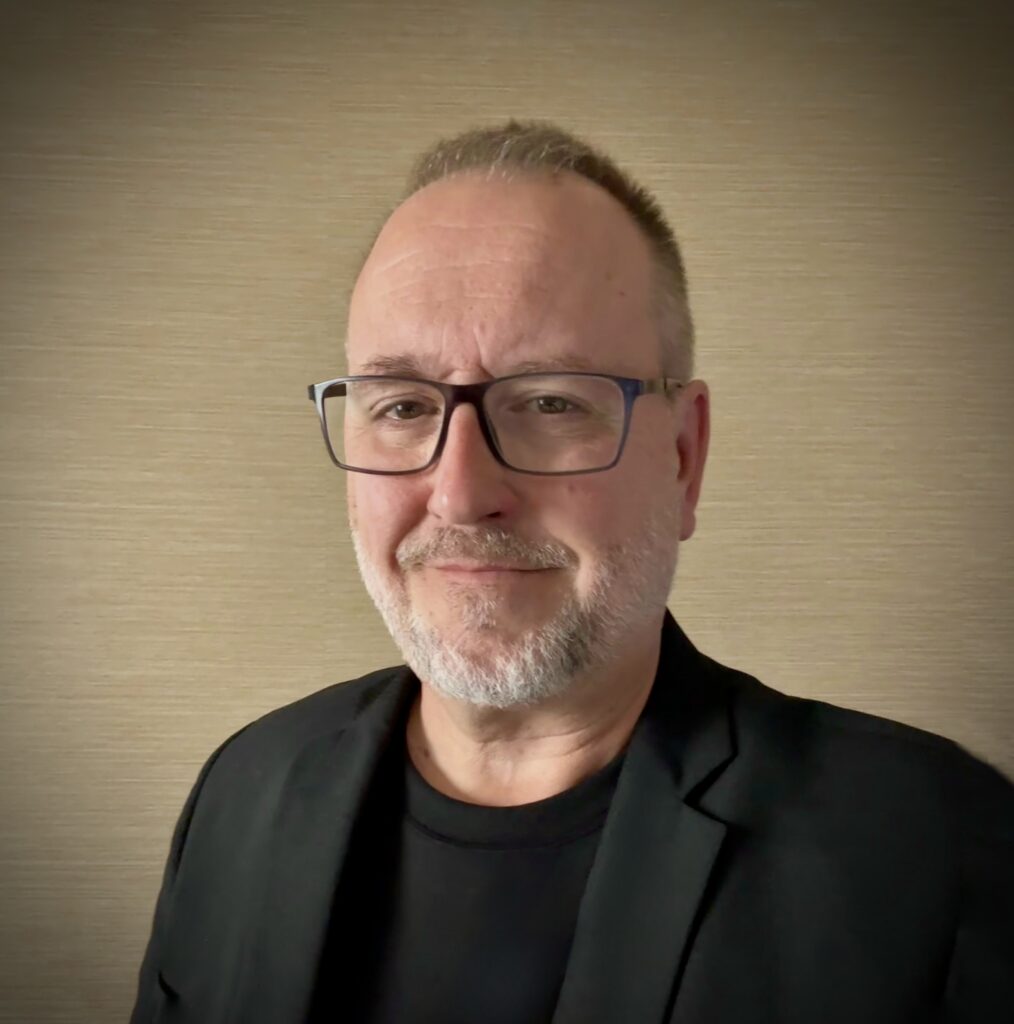
Jérôme Laforcade, TRIZ trainer and founder of TRIZ Conseil

The trainer

Jérôme Laforcade

A consulting engineer specialised in applying TRIZ in industry for 25 years, trained directly by the founders of TRIZ (graduate of St. Petersburg University). He has led more than 500 projects in automotive, aerospace, energy, chemicals, cosmetics, medical devices and food processing — one of the broadest industrial track records in Europe. Since 2006 he has built a proprietary engineering-effects database and AI-assisted TRIZ tools that feed directly into the course. Working languages: French or English.

A shorter format

TRIZ introduction — 1 day

Need a first awareness session rather than a full skill build-up? The one-day introduction reveals TRIZ theory, opens the mind to creativity and raises awareness of the psychological blocks that hold innovation back.

By the end, participants:

On the programme: TRIZ concepts and history; physical analysis (Su-Fields, inventive standards and Smirnov's algorithm); contradictions (the ten-question algorithm, the pointers method); laws of technical system evolution (S-curves, ideality, completeness of parts); creativity, psychological inertia, cognitive biases and facilitation techniques.

An ideal gateway before the full 3-day course. Duration: 1 day.

Practical information

DurationFull course: 3 days (18 h) · Introduction: 1 day
FormatIn-house (on-site or remote) or inter-company · 4 to 10 participants
LanguageFrench or English
FeeTailored quote, based on your context and the number of participants

Run a TRIZ course for your teams

Let's build a session tailored to your context and your real cases.

Request a programme

or call +33 (0)6 22 06 93 28